Gunpla Update

I just finished watching Mobile Suit Gundam 0079 (the original series). It’s a fantastic fictional war-story, that for 1979, exemplifies the animated science fiction genre. It’s strange that in an age of Scooby Doo and Casper; Japan evolved from Kimba the White Lion, Astro Boy, and Speed Racer to a dramatic animated series discussing adult topics.

I just started watching the following series, Mobile Suit Zeta and not only am I really getting into the story surrounding the events of the fall of the Zeon Principality, I’m falling in love with the characters, and the mobile suits, especially “Quattro’s” custom Rick Dias.

Of course, being a model kit fanatic, I had to look it up and found it online. I’ve preordered a 1/100 MG Rick Dias Quatro custom model kit. I am certainly excited to receive it and post updates!

033_RickDias-qc_01

In the meantime, Char’s custom Zaku II is still in progress. It shouldn’t have taken this long, but there were various delays in the model due to some paint tests and a decal mishap. I’ve finished up the weapons yesterday and applied some of the decals. I also received a replacement slide-on water decal sheet from Japan (shipping took forever!) to replace the damaged sheet that I messed up with an exacto knife (Note to self: Use scissors on slide-on decals, not exacto-blades). I’ll post the finished result when I’m done, since I haven’t kept up with the in-progress photos.

It’s Not Easy Being Awesome

As ridiculous at it may sound, being awesome is the goal of my life. Yet there’s a balance to attain a level of awesomeness that’s not easy to reach. How do you pull it off without being too cocky? Unfortunately, there’s no instruction manual on being awesome as far as I can tell, so I have to wing it.

The most important thing methinks, is being yourself. Of course, this is easier said than done. Underlying the cliché phase of “Be Yourself” comes the existential questions: What is “yourself”? Is it the natural self? Is it the mask you put on to fit in society? If the self is ever-evolving, what is true and what is not? I’ve asked these questions for years. I found the sad truth that life is more or less shaped by the precious resource known as time.

So how do I manage to balance time, stay ahead of the game, and not burn myself out? I’m working out the kinks right now. The good news is, I’m finding my strengths and fortifying them in a way that works. Whether it’s trying out piano, guitar, illustrating, gaming, or studying languages and sciences. I’m somehow comfortable that one of my biggest strengths is this: writing.

Gee, Bob where did you learn to write like that? "It was nothing except a little ghost in my computer"

Gee, Bob where did you learn to write like that? “It was nothing except a little ghost in my computer”

On occasion I get compliments when I write. Whether it’s evals for work, editing a buddy’s e-mail for his resume, my grandmother complimenting me, or friends saying my words are well-written. It’s something I sometimes take for granted. In fact, I hate taking credit for writing and I often go in the background as some sort of mysterious ghost writer. Why? Because I love to write. In fact, sometimes I’ll go through an entire well-written prose, toss it, and rewrite the whole thing in a different way (in fact, I rewrote the first few paragraphs of blog post about 2–3 times).

How did I get this way? No clue. I’ve always had a knack for writing, and started reading 700-page adult novels by the time I was 11. I started my first web site when I was about 13, and before there even was such a term as “blog” I was already making content tailored toward specific interests. If I hadn’t been pulled from High School and steered toward a different artistic path, I might be writing articles for websites right now.

There’s the belief that once you reach a certain age, you stop learning. Your career is set and you will live in that path for the rest of your life. I’m not so sure I follow that. Age is nothing but a mere arbitrary number that signifies certain milestones in life (when you can drive, when you can vote, when you can drink, etc…). Yet you are who you make yourself out to me.

For my path? My future? I have a few areas I want to focus:
– Not making my job the focal point in life (Sorry US Navy…you’re just not right for me).
– Being able to maintain my lifestyle, while making room for expansion.
– Enhance my education.
– Maintain a creative outlet.

The first step, I’m trapped in. I have to wait another 10 months, so in the meantime there’s total control over how I dress and groom myself, how I eat, where I live, and when I sleep by people more “important” than me. Yet by allowing myself to not make it the central focus I’ve been happier now than I have been in the last 5 years.

At the same time, my current job has set the bar for a certain way of life. If it wasn’t for this job, I wouldn’t my own car, my own computer, phone, electronic devices. Going from the US Navy to Wal-Mart would be a huge step back financially. I need to stay at this financial level, or raise the bar with a higher paying job.

There’s a danger of stagnation not only financially, but with knowledge as well. If I don’t keep learning, I will run the risk of being obsolete within 15–20 years. If I’m an electrician in “X” job, what is there to say there will be a new piece of technology that I am not skilled in? Then what? So enhancing my knowledge, even in an unrelated area (such as coding/programming) can only be beneficial.

Last but most important: maintain a creative outlet. I like to draw, but I don’t consider myself an illustrator. I like to play music, but I don’t consider myself a musician — but I like to write, and I do consider myself a writer. In the next upcoming months I’m planning on some personal project to enhance my writing. Will I be the next Stephen King? Probably not, yet I do have a drive and a passion for writing. Whether it’s some random entry in this blog, a personal thought in my offline journal, personal observations in my many Moleskine journals (with my fancy fountain pens!), articles for some big blogging site, or a short story written up in Scrivener. I have the tools and the patience to push forward.

60e3adcea79b586e45c60d394053aaa4

I just don’t want to be this guy.

So does this all make me awesome? Hell yes! I’m just happy I’m able to figure shit out before I become some dude smoking weed having some sort of midlife crisis. Now I just need to push forward and get my research engine rolling again!

A Japanese Primer

One of the biggest questions I see on the web with self-taught Japanese is: Where do I start?
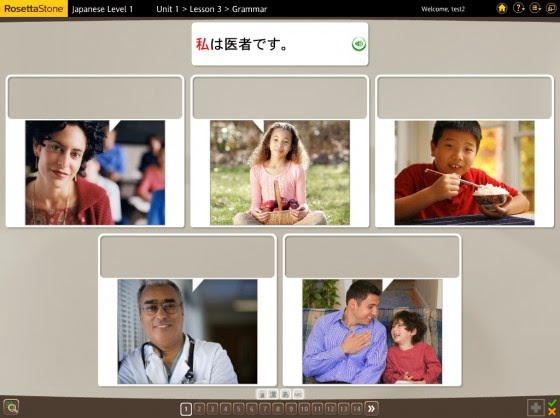
It’s easy to pick up a copy of Rosetta Stone, but it’s not a really good way to learn the language. Other than vocabulary and some very basic grammar, it’s weak in about every other aspect. There’s cultural differences with language that Rosetta Stone cannot teach, such as the differences between formal and informal speech, the difference between dialogue during different times of the day, or the differences between contexts (there’s more than one way to say Hello or Goodbye, for example…or saying Konnichi wa when it’s 9AM or 9PM, people will give you weird stares.). For a $300+ piece of software you’d expect more.
“I am a doctor.” I got this! *Orders tickets to Japan*
With Japanese language study, the most important resource you have at your disposal is time. No matter how you study, devoting at least 30 minutes a day to your studies is much more benificial than a giant 2 hour chunk once a week. It maintains memory retention, develops habits, and over time you’ll be way ahead of the curve.
What I suggest before you start investing in software or books is this: Forget about Romanji. Learn the Kana. Romanji is the romanized words you see in Japanese: “Konnichi wa”, “Sayonara”, and “Karaoke” instead of “こんいちは”, “さよなら”, and “カラオケ”. By training yourself to read a new alphabet from the start, you’ll have a much easier time down the road. Learning the Kana (which consists of Katakana and Hiragana) is as simple as creating a set of flashcards to reinforce your knowledge.
But what’s the fun of flashcards? With technology nowadays there’s great resources that provide flash-cards in a quiz-based format. Some apps even offer Space Repetition Learning Systems (SRS) which builds your knowledge on characters you struggle with while showing the easier cards less frequently. If you have an Android device, Obenkyo is a really great tool to teach the basic Kana. On iOS, Minna no Kana and is just as good. Both are free software and really easy to set up. Anki is another excellent tool but due to its complexity, it will be discussed later in this writing.
When you start, study JUST 5 characters at a time. Start with “A-I-U-E-O” at first, when your confident with that then go to the next set: “Ka-Ki-Ku-Ke-Ko”, etc and continue to drill yourself each day until your confident enough to start reading. It also helps to write out each character as well so you can get the stroke order right (which helps makes your handwrighting more consistant when you start writing sentences).
If your an impatient-type (like me) and want to do more than just learn Kana all day, there’s an all-inclusive software that gives you the basics, Human Japanese is a great software for beginners, going slowly through the Kana while teaching you the basics on grammar, cultural notes, geography, and other fun stuff. It’s available for PC/Mac and Android/iOS/Windows devices. It’s a great piece of software, but the pacing is a bit slow in my opinion compared to the traditional text-based book.
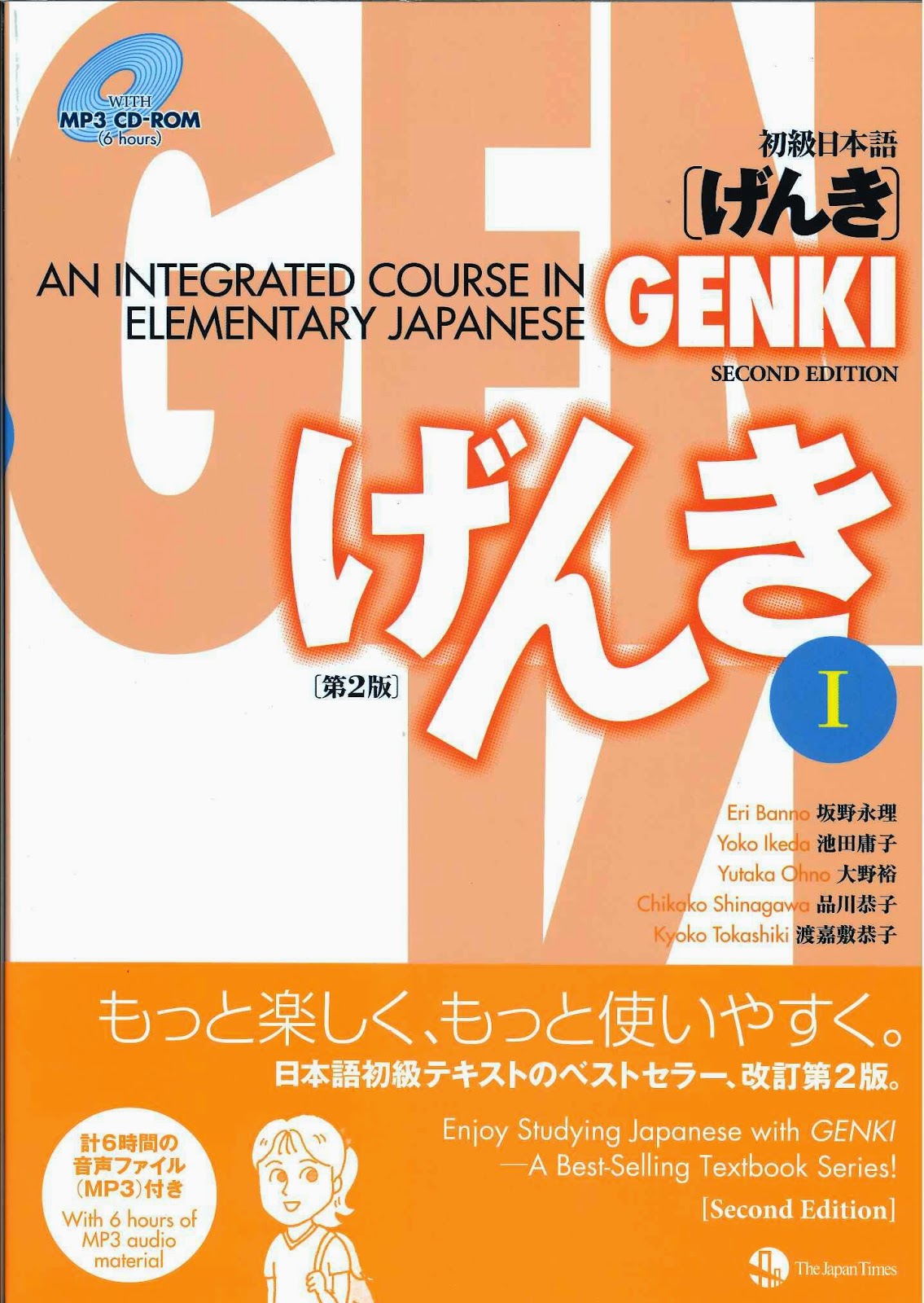
Once you grasp the basics of the Kana, you need to build a foundation in your knowledge of grammar. You can continue using Human Japanese in this aspect, or as I prefer: use a textbook. I use Genki I and II (Second Edition). A new copy can be ordered from Amazon.com for $60. It’s widely acknowledged as one of the best college and self-study textbooks out for learning Japanese. It also comes with a CD-ROM so you can listen to some examples and get a grasp for the language and pronunciation. It’ll teach you the very basics and by the end of the book you should be proficient enough to take the JLPT 5 Exam, if you choose to do so. There’s also an accompaning workbook that is useful for extra study, but I’ve found it unnecessary unless you find yourself really struggling with some topics.
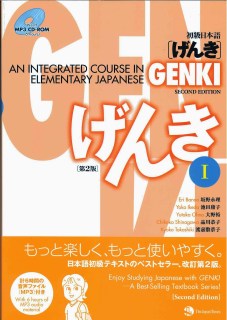
So you picked up Genki. You find yourself confused that there’s two sections: Conversation and Grammer comprising the first half of the book; Reading and Writing comprising the last half. Make sure you start on Chapter 1 on both sections and study both concurrently (as opposed to reading from cover to cover) and you’ll find the lessons will flow a lot better.
While you read through Genki, you’ll probably find yourself constantly going back and forth between the vocab and the questions. How do you reinforce your knowledge of vocab so you’re not constantly “cheating” by looking pack a couple pages? I use Memrise, which is an excellent (and Free) site that you can use with Genki, simply by typing “Genki” in the search-bar. I use the Genki set by “Johan86” which quizzes you with questions on reading, matching, and spelling by chapter. Users also can submit their own mnemonic hints to give you a frame of reference when your stuck on a word you can’t remember.
“Ok this site is cool, but didn’t you say earlier not to use Romanji?” A cool trick you can use in conjunction with Memrise is to install Japanese IME (Input Methods) on your computer and devices. Look up your device settings on installing Japanese languages (or Google it) and you’ll be able to type in Japanese using Romanji inputs on your keyboard, so if you type “nani” it’ll translate it to “なに” and even better, it’ll switch it to Kanji “何” which can be incredibly useful.
So it’s been several months. You’ve been using all the sources above as well incorporating some of your own. You’re able to grasp many of the grammar basics. But when you try to play an import game, listen to JPop, Read inport Manga, or watch anime you still struggle with reading/listening to anything that isn’t elementary grammar or vocabulary: “I am a doctor”, “My name is ____”, “Where is the bathroom?”. Even worse, you even find yourself beginning to forget some of the words you used to know. What now?
Congratulations: You are now an Intermediate Japanese learner. This is where the college courses get more advanced, the “How to learn Japanese” books and software reach an endpoint, and most people hit a brick wall. Fortunatly, it’s not as bad as it sounds.
I’ve avoided talking about Kanji until now. There are many books and software that reference the Kanji; but they don’t necessarily teach you the best way to learn the characters, the differences in the On’Yomi/Kun’Yomi pronunciations, or what happens when you mix up one Kanji with another in a word, and different contextual readings. When you look at the word for Japan (日本), for instance: taken literally it can be read it as “Sun-Book”, which makes no sense at all (it’s Sun-Origin actually). There’s too much of an emphasis made by publishers to focus on the meaning of the Kanji; and not so much on how it’s used or how frequently it’s used.
While Genki and other resources do a decent job at giving you a glimpse of the vocab used in conjunction with Kanji. There’s other ways to reinforce your knowledge without wasting your time on rote memorization that you’ll forget in a couple weeks anyway. The best way is to study the “Core 2000”, which are the most common 2000 words used in Japanese today.
The Core 2000 comes from a site formerly known as smart.fm. It was a free site that skipped the introductory levels of learning and throws you into writing words and sentances (similar to Memrise) with accompaning audio and images. It’s now a pay-site known as iKnow! which is about $10USD/month. While the site, their progress tracking, and the iOS/Android software are impressive…there are free options that are just as good.
I personally use Anki, which is a Flash-Card program. It’s extremly powerful (you can add pictures, links, and audio clips to your notes) and widely used by many Self-Learners. You create a “deck” or download shared decks from the web to study off of. I personally use the Core 2k/6k Optimized Japanese Vocabulary deck. There’s an additional media pack you can download to enable image/audio (put it in your Anki/Media folder). Anki starts simple. It gives you just 20 words a day, while it’s tempting to increase this count I suggest sticking to the default 20. Eventually you’ll start getting reviews of 150+ words and at that point it’ll take a really long time to complete a single Anki session. I also suggest enabling Furigana.
The underlying beauty of the Core 2000 isn’t so apparent until you’ve been using it after a few months. Used in conjuction with the media pack you’ll start recognizing Kanji, vocab, pronunciations, contextual clues, spelling, etc. You’ll begin to see why it’s important NOT to learn the Kanji as a character, but to learn how it’s used…and your mind will adapt to seeing visual patterns in the same way we can “recognize” ae sintanc regaadles o hw itz speled juss bi lokin at spcfc pttrns in the wy th werds “look”.
Writing out Kanji is another thing…but that’s personal preference whether you want to take the time to learn it or not. It’s a fun skill to learn, but in my opinion it’s unnecessary to learn it until your proficient at reading. If you have some extra time and you do want to practice it out a bit, check out Heisig’s Remebering the Kanji series. It breaks down the Kanji into smaller, easier chunks and gives mnemonics to help memorize each character. Essentially it trains you to stop seeing Kanji as a complex puzzle and into elements that make it possible to identify and write out. For instance, 語 you might see a bunch of boxes and lines, but I see the element for “Speech”, “Oneself”, which combines to be “Language”.
Again, Kanji is a beast to learn, which is why it’s important to learn the vocabulary (How it’s read in Kanji and how it’s pronounced with Hiragana). The Kanji will start to make sense after you become more proficient in the language and in fact, I find it extremely useful reading since it removes the necessity of spaces that we use in Western languages.
Example: I speak English
わたしはえいごをはなします (watashihaeigowohanashimasu?)
Reader: “I can say it…but I can’t read it…”
versus
私は英語を話します (watashi wa eigo wo hanashimasu)
Reader: “Ahh now I can read it!”
Which (after you train yourself with the vocabulary), your mind will start to see it look like this:
So there you go. Hope this helps with learning. If you have any questions or suggestions on software, let me know 🙂
A lot of people have asked me “How do I start learning Japanese?”. It’s not easy, as is well known. But it’s not hard either. I’ve been studying for over a year now, and though I’ve made mistakes in the learning process (and still make mistakes), here’s a guide on how to start learning Japanese.

First you need to ask yourself, why do you want to learn? This question is important, as you can allow yourself to focus more on the things that are essential to your learning.

“I want to travel to Japan for a few weeks. But I have no interest in staying.”, “I’m a weaboo [1] and I want to say random Japanese words and phrases to impress my otaku friends”

If this is the case, you’re better off with a good guidebook on common phrases, cultural notes, and social etiquette. You don’t necessarily need to know Kana[2] or the Kanji[3], but a knowledge of pronunciation will certainly help. There are plenty of cheap books on the iTunes store, Google Play, or at your local book store.

– *”I plan on transferring there for the military”, “I am interested in the JET[4] program.”, “I’ll be moving there with a spouse”. 

I highly suggest taking a class at your local community college to teach the basics. Knowing how to speak will be certainly helpful, as well as knowing the cultural differences. Knowing the Kana is very important as well as grasping an understanding on some basic Kanji. I suggest studying and taking at least the JLPT 4 and 5 exams [5], which will test you on the most basic knowledge that will help propel you on your career, as you’ll need that knowledge to navigate around town, figuring out signs, reading menus, and general basics.

– “I’m want to study just for fun. I want to be able to read and translate manga, import Japanese video games, and watch raw unsubbed anime.”, “I want to learn the language but don’t have the time or money to visit Japan or to take classes”

If this is you, then you’ll want to consider self-study. With the internet these days this is totally doable, but can be significantly more difficult since there’s things that books and audio clips can’t teach without being immersed in the culture. 

In a future article I’ll go over some of the various methods for self-study and what works for me.

[1] Obsessed Japanese fan. Wants to be Asian, but has no grasp of the culture or societal norms other than what they’ve seen on random JPop clips on YouTube.
[2] Kana is a syllabic alphabet system consisting of Hiragana and Katakana. Hiragana is used primarily for Japanese words, particles, and suffixes. Katakana is used mostly for Foreign words, names, and places. 
[3] Kanji is the Chinese-derived character system. Used both in conjunction and in place with hiragana. Comprised of two different reading systems: On’Yomi (Chinese) and Kun-Yomi (Japanese).
[4] Japanese Exchange and Teaching Program
[5] Japanese Language Proficiency Test. Ranges from JLPT level 5 (basic elementary skills) to JLPT level 1 (extremely advanced). Questions comprise of grammar, Kanji proficiency, readings, etc.

PC Gaming

The last week has been rather busy work-wise and the next couple of weeks are going to be more or less the same, which means my backlog will probably be at a standstill with the exception of a few handheld titles.

In the meantime I’ve begun the process of consolidation for some of my PC games. I’m setting up my PC for specifically MMO’s, Online games, strategy games, a few indie games, and Japanese visual novels. It’s a nice machine for some higher-spec games…but the frustrations of dealing with DRM and being away from the comfort of the couch and a big screen is what draws me away from more mainstream games. Fortunately most of my “Must-Have” PC titles have been released for free on Playstation Plus in the last few months, such as Borderlands 2, Bioshock Infinite, and Payday 2…which practically has turned my laptop into an expensive web browser.

With that said, I’ve been shopping around for some good free MMOs. I have Age of Conan, Star Trek Online, DC Universe Online, APB Reloaded, and Lord of the Rings Online queued up on Steam so I’ll see if those are any good. I also tried Tera Online and Phantasy Star Online 2, which both seem pretty decent, although I need to get an English patch for PSO2 and risk getting permabanned.. There’s also Elsword and Aura Kingdom which I’ve barely touched.

Still, my MMO of choice is Final Fantasy XIV. I have a buddy on the ship who has a character on the same server as me, but I generally don’t like pairing up with friends for MMORPGs. Often they are so far ahead that when I pair up with them, they will either help me power-level (which forces me to skip a lot of the content in the game without understanding much of the mechanics)…or they will be doing high-end dungeons while I’m running around looking at trees and stuff…yeah I’m not quite a devoted hard-core online gamer as my buddies, which is why I don’t play multiplayer games with them often.

I also have been playing around with some PC Customizable Card Games. I picked up the open beta for Hearthstone which is fantastic so far, like a simplified version of Magic the Gathering. It’s a great game and I can’t wait for the Android release for my Nexus 7. I’ve been playing Magic 2014 on my Tablet and it’s A LOT of fun :), it’s like having $500 worth of Magic cards in a $10 digital format…can’t go wrong with that!

February is a big month for gaming. I finally received my confirmation e-mail on my Bravely Default Collectors Edition which should arrive next week. There is also Toukiden, Final Fantasy XIII-3, Professor Layton, Ragnarok Odyssey ACE, Castlevania Lords of Shadow 2, EDF 2025, and Danganronpa coming in this month.  Along with my hectic work schedule, it’s going to be a very busy month.

The iPhone

I finally picked up an iPhone 5s this week along with a new phone provider. It’s amazing how simple to use this device is, heck even my mom is having fun learning the ins and outs of it, which shows something about the Android. The biggest differences I can tell is that the Android, while having extremely good flexibility and power for a low cost, can be a little overwhelming to people who want simple first-party integration and functionality, and quite often 3rd party software developers, the cell phone providers, the operating system developers, and the hardware manufacturers butt heads (similar to a PC) creating so much unnecessary bloatware that it’s mind-boggling for a new user to understand the basics of the device.

A good example is the Samsung Galaxy S-series of phones. Let’s say you want to check your text-messages. You can use the default Samsung app, Google Voice, Google Hangouts, or Chat-On. If you want to purchase software, you can use the Amazon App-Store, the Samsung Marketplace, or Google Play. Internet browsing you have the option of the default Samsung browser, Chrome, or Firefox. If you want to check your e-mail you have Samsung’s application or Google’s alternative. Even looking at images there’s at least 4 different gallery apps, and taking photos is a pain on it’s own when you have Dropbox, Google +, Facebook, and Google Drive all asking to upload your images.

To make matters worse, Samsung and Sprint not only wants to bundle their own software, but they make it unremovable unless you decide to root your phone. Why do I need a Sprint Zone app if I never use it? Why do I need two e-mail apps, two different browsers, three text messaging apps, etc? On top of that, OS upgrades are decided by both Samsung and Sprint. You’ll have a piece of hardware that’s capable of running the latest platform, but you’re waiting for Samsung to give the go-ahead 4-5 months down the line so you don’t have the scenarios such as the S3 competing against the S4 with the same up-to-date operating system…and then when they finally give the go-ahead you wait another month for Sprint to roll out their updates (unless you reset your phone profile to make it look like a “Brand new phone”).

So when I am trying to teach my mom how to use her Android device and she asks me questions like “How do I send pictures to my computer?” And I have to show her how to install Samsung Kies, plug the phone in directly and browse the File Directory to the images folder on her External SD Card, or how to transfer images via Blutooth or WiFi Direct, then you’ve failed at making a device understandable and accessable.

I believe Google’s line of Nexus products are a huge step in the right direction. Having the OS designers work with a well-known hardware developer (Asus), and giving you the option of ordering directly from them to avoid the bundled proprietary software from cell-phone providers is huge…but brand recognition is still a ways to go. People know what Android is, people know what Samsung Galaxy S is, people know what the Nexus 7 is…but what about the Nexus 5? I think Google should really try to improve it’s marketing and advertising campaigns, but it’s hard when you have so many devices already running on your own platform, then you have people asking “Why do I want to spend $300 on a new phone with KitKat 4.4 when I already have a Galaxy S3 with KitKat 4.4 installed in it? Just to run Angry Birds faster? So I can get rid of some of these excess Samsung apps?”

Then there is the iPhone. I’ve had previous experience with Apple products, most notably the iPod Touch line of products a few years ago. Eventually my 2nd gen device fell into the “No Longer Supported” graveyard and I just stopped using it completely in favor of Android products. Going back to the iPhone is like a breath of fresh air. As a gamer going to the App store and finding all these iOS gems I’ve been waiting to be ported for Android for months/years is reason enough to justify the switch. But the fact that Apple’s proprietary software is good on its own without the unnecessary bloatware (or almost-mandatory installs of better software to replace the Samsung junk) of an Android device creates a great easy-to-use device.

Already I’ve noticed my battery life is almost triple what I had on my Android, my mother was actually able to figure out most of the features of her phone without constantly asking me for help, and my sister is sitting back playing LEGO Harry Potter for hours on end. The call quality is extremely superior as well, and I can’t tell whether it’s the 4G LTE (Which T-Mobile now provides, that Sprint spent years making excuses on) or the hardware itself, but the first time I picked up the phone and heard what sounded like my sister being right next to me was extremely surprising and unexpected.

Heck, even my car sees the iPhone and displays the information as such instead of me fiddling around with my Android file-folder structure whenever I start my car…that alone is good enough for me :).

Changing Tastes

It’s strange to see how tastes in gaming and entertainment can change over a while. As a kid, I used to be hugely into JRPGs, Anime, Manga, J-Pop, etc. This was back around 99-2000 when Anime was just starting to kick off from being child-like cartoons (with Pokemon/Digimon primarily) to a respectable art form through avenues such as Toonami, Fox, etc. I grew up falling in love with Gundam Wing, Big O, Cowboy Bebop…heck I even caught the occasional episode of Sailor Moon.

Going into a Barnes and Noble in the 90’s, you would find maybe one copy of Volume 2 on a Manga that was released 10 years prior…now the shelves have more Manga than Domestic Graphic Novels. Also video stores have changed, if you wanted to watch Evangelion Episodes 1-3, you had to pocket out $59.99 for the DVD…now that’s the price for an entire series on Blu-Ray (Episodes 1-26). Also, back then if you wanted to watch anime on the computer, you had to go through various backdoors (this is the pre-torrent era) just to watch it. Now you have various legitimate online websites such as Hulu or Crunchroll that simulcast the same day the show airs.

Even gaming has changed, with Sony making their devices region-free, I’m able to play games months…even years before they come out to the States (if they even come out at all). This has definitely upped the pressure for me to learn a new language, much more so than it had back when I was in High School as a weird Otaku/Nerd dude.

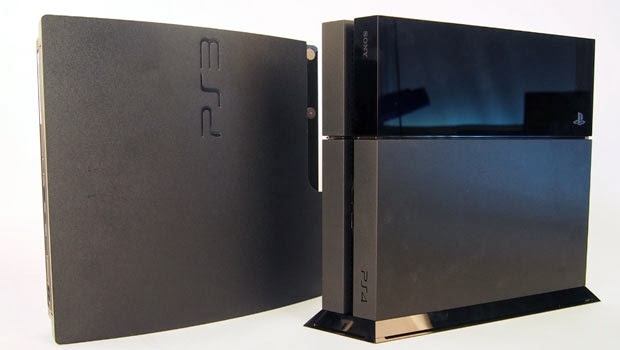
So things have changed very fast, which probably explains why I lost interest for a while. There was admittedly some outside influence and negative comments regarding Japanese entertainment, so I stopped caring for a while, binned my figures, DVDs, etc. The anime genre at the same time started taking a weird change and I just couldn’t care that much about Naruto or Bleach; mangas were too many to keep up with; I started cringing at the JRPGs, with weird non-sensical stories and horrible dubbing. I ended up going along in favor of the mass favor of the XBox 360 with its US-based games, and didn’t even bother picking up a PS3 until only a couple of years ago just to have a separate console for my place in Everett while I was away from home. Little did I know back then that it would remain my console of choice…

Gamer’s reaction to the consoles throughout the years:2006: Sony don’t “get” gamers. XBox 360 FTW!
2013: Sony really understands gamers! BOO Microsoft!!!

Much has been written about the difference between Eastern and Western games. I think the PS3/360 split of last generation was a direct result of that (in fact, I would argue there’s a third split with console and PC gamers, with the latter focused more on strategy and indie games…but that’s a separate topic). You had one group of gamers who preferred more action-packed, pick-up and play multiplayer games (Madden, Call of Duty, Battlefield, Medal of Honor, Gears of War, etc…) and a set of gamers who preferred more cartoony elements, story-building, and simplified gameplay (Dragon Quest, Final Fantasy, Phoenix Wright, 999, etc…). Coincidentally, with drastically different sales figures between both East and West and growing differences between Japanese Developers and Western Developers brought about the split between the PS3 vs XBox 360. Where the Sony represented the older generation quirky Japanese titles that Western gamers were getting sick of, and Microsoft represented the next gen, graphics-focused action-packed and Indie games that Western developers were already extremely good at on the previous XBox and PC (which also started a new recent trend of focusing less on PC development and more on console development). Ironically this is exactly why Microsoft received so much initial backlash with the XBox One as they began to cater more towards the big Western publishers (EA, Ubisoft, etc…), implementing restrictive DRM schemes similar to the headaches PC gamers already endure, and Sony chose to stay with the less restrictive path of the previous generation.

Oh and Nintendo…well they did their own thing, ignored gamers altogether, sold an underwhelming console, still enact region-locking, poorly implemented multiplayer functionality and failed to grasp the attention of 3rd party developers for the Wii and now the WiiU, which is now biting them in the ass. But at least the 3DS is still getting great localized games, wish I could say the same for the Vita (at least Toukiden is coming out next month!)

Bravely Default comes out on the 3DS in a few weeks! Thank you Square Enix!
As for God Eater 2 for the VITA…still nothing from Namco-Bandai.

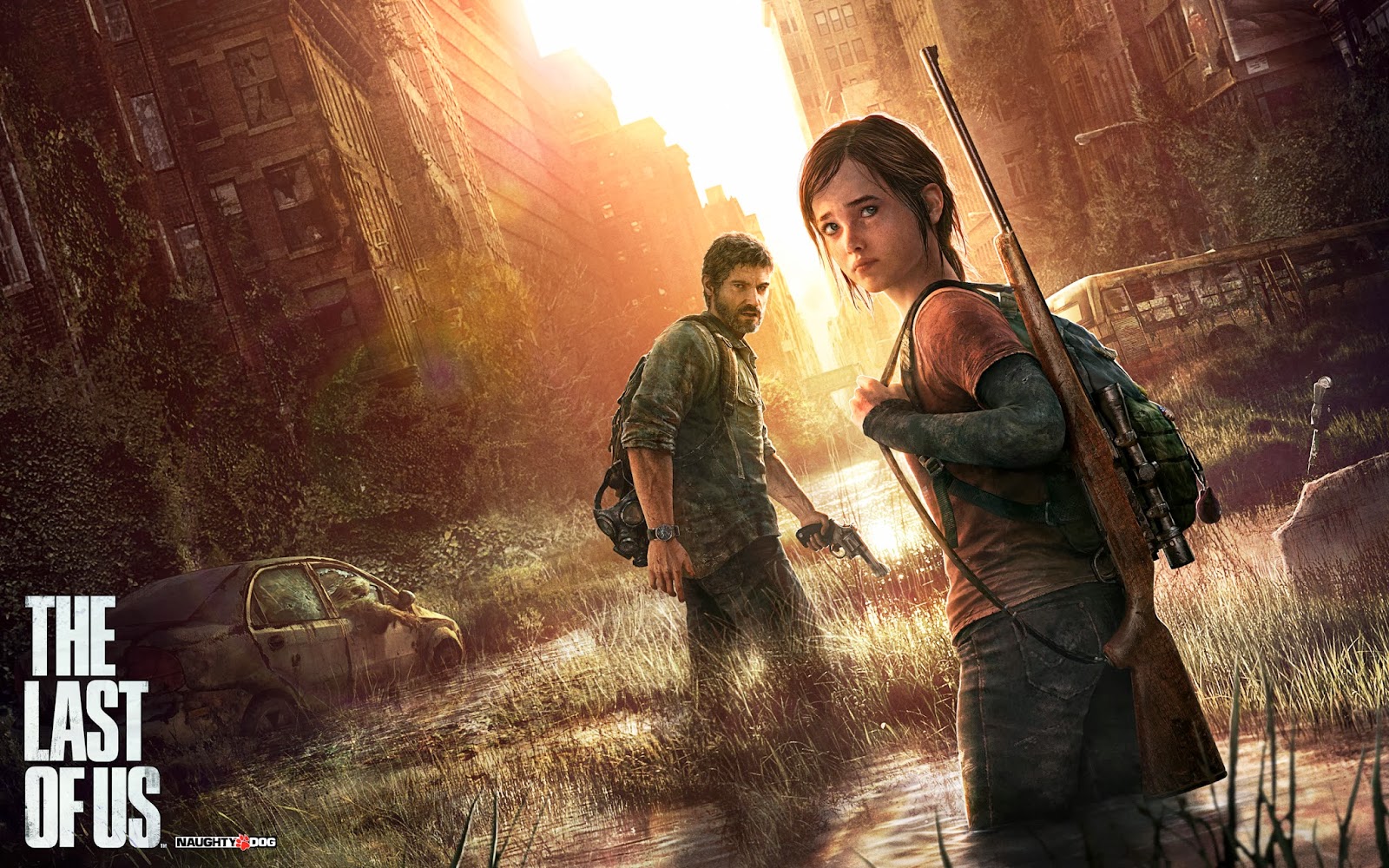
 As a gamer, I’ve played games from practically every genre. Despite the poor reviews from respectable Western outlets, I took Hyperdimension Neptunia Mk.2 for a try last year as the first JRPG that I’ve played in over four years. My first impressions were “Wow…this is bad!” I cringed at the English dub, couldn’t quite understand the story, the references, or the humor. My first thought was “With games like the Last of Us or the Walking Dead collecting dust, why on earth was I playing something like this?” I would have shelved the game if I had not turned on the original Japanese dubbing, looked up some of the references, and continued on with the game.

Hyperdimension Neptunia

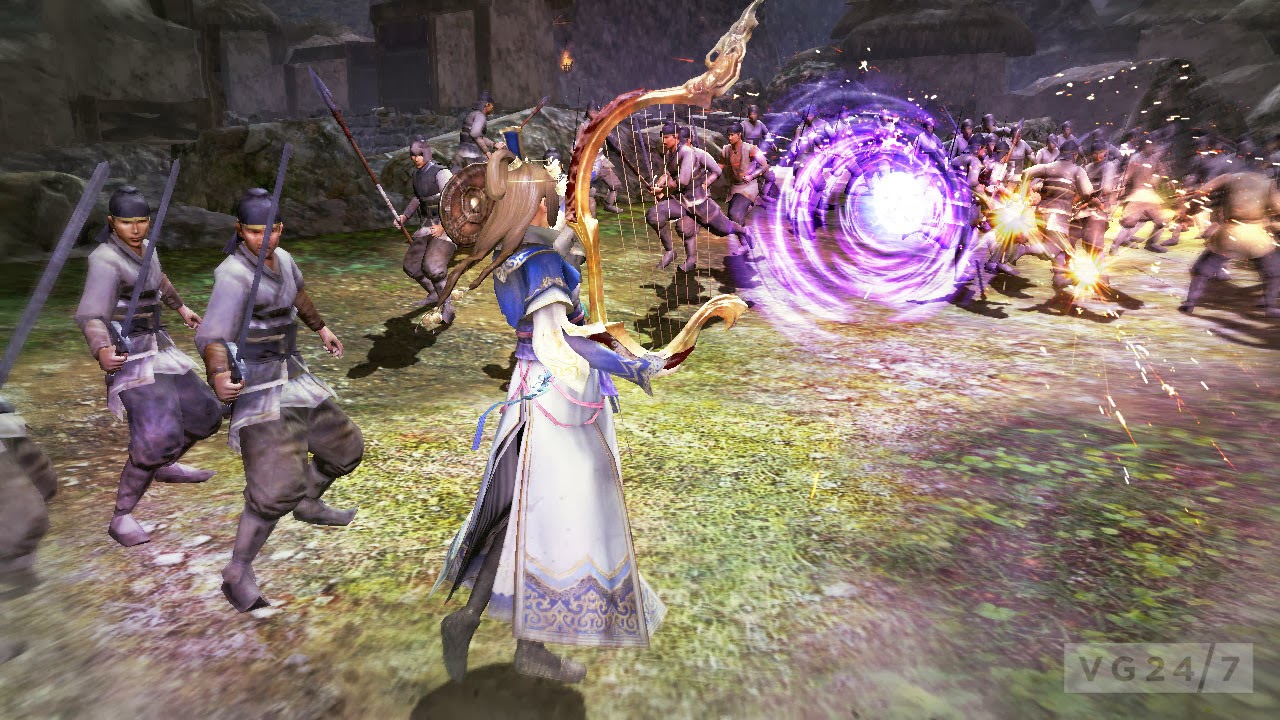
I had a similar story with Dynasty Warriors, an import gamer friend of mine highly recommended the series, but my first impression was the poor dubbing and not understanding what the motivations behind these weird Chinese soldiers. I would ask: “Why is Cao Cao so focused on ambition…”, “Why is Liu Bei such a pansy…”, but the gameplay was interesting enough, and when the Japanese audio DLC came out my impressions changed drastically. I could finally feel the emotion at some of the character’s deaths, instead of listening to someone read a poorly translated script. I also really enjoyed the character design of most of the characters…instead of having over 60 identical Chinese warriors, I have a selection of male and female warriors with different manners of dress, expressions, etc. And reading the original story and seeing a face to these real-life warriors makes the game much more personal, and even more impressed knowing how accurate the game is to the real story (minus a few details added for effect).

Cai Wenji, historically kidnapped by a group of Nomads and rescued by Cao Cao. Proceeds to kill a bunch of generic warriors with her harp. That’s historical accuracy right there!

This, coinciding with my Japanese studies, has overwhelmingly put the preference on leaving it on the original Japanese dubbing. Some things simply do not cross well, especially with bad dubbing. Now that I’m importing more games and learning more vocab, I’m opting to skip waiting for Western localization altogether. I just imported Sengoku Basara 4, for example since Capcom has no intentions of releasing another Sengoku Basara title here in the States due to poor sales of the last game.

Western Gamers simply don’t like Samurai Games

My interest in anime is also starting to blossom again. I just recently finished the entire series of Steins;Gate and finished first season of Oreimo. I have Kill la Kill, Attack on Titan, amongst many other series on my queue. I also picked up a few Mangas on my tablet to read and enjoying them a lot, almost as much as I enjoy Western comics (because unlike most Western comics, there’s a beginning, and an end to each series, and no need to jump into a specific story arc).

Check out Kill la Kill!

What I find most impressive of all, is that for the first time in years, I’m not bored. I used to spend a majority of my time on my laptop looking for Steam sales and trying to get into stuff like League of Legends, DotA, Team Fortress 2, and a bunch of indie games that earned much acclaim from reviewers. Yet after spending a few hours downloading, I’d sit there, play the game for an hour or so, get bored…and then the game would start collecting “virtual” dust. I was always baffled “This was rated Game of the Year by “Random” Gaming Magazine…, so I should enjoy this…but I’m not?”

I would enjoy this a lot more if it wasn’t so depressing.

Perhaps the easiest explanation for this is that my tastes are changing, or rather they are returning back to my original tastes…what got me into Eastern gaming in the first place back when it was big in the PS1/PS2 era. That’s not to say I dislike Western games though, I really enjoy GTA V, Bioshock Infinite, Assassin’s Creed, and Saints Row IV for instance. I also still use my laptop to play FFXIV, World of Tanks/Warplanes, Farming/Rail Simulator, and Paradox’s grand strategy games. But my tastes are much more different than what most other people enjoy…so perhaps that’s why it’s hard to explain sometimes that while I am a gamer, I am not…well…typical from most gamers?

Observations and tips for learning Japanese.

Weekend is coming up soon…after a long week of work I gotta say I’m looking forward to it.

Hopefully I can put some hours into my gaming backlog this weekend. I’m considering skipping FFXIII and XIII-2 and just going straight to XIII-3 when that comes out, since the fan-service and gameplay intrigues me much more than the prior games. Not to say the last two games are bad…it’s just they aren’t that good…(which more or less equates to the same thing)

I’ll be playing FFXIII-3 Lightning Returns for different reasons…

I also want to start playing some Atelier Totori Plus for the Vita and dabble a bit with Ar Tonelico on the PS2

Not sure why I stopped playing this game! 😛

I think my last post showed some of the difficulties it is in learning a new language. In a nutshell, the traditional route I’m taking in learning a new language is much too slow.

That’s not to say that I shouldn’t read from Genki I or stop practicing from my Learning Kanji book. Those are essential in writing and speaking properly grammatically as well as learning the correct conjugations. But the vocab isn’t enough. Two-three weeks to learn 50 words is way too slow, especially when I know my memory retention is much higher based off previous studies of other learned languages. So I’m now using a combination of two apps.

The first app, Obenkyo taught me Kana when I first started learning a few months ago and gives vocab based off the JLPT; it has Kanji testing too, which is useful should not be used in place of vocab…because you’ll either forget it shortly after, or remember the English meaning but have no idea how to say it in combination with other Kanji. “Oneself(自) + Revolve(転) + Car(車) = Bicycle(自転車)?” I just started it up again a few days ago, added about 20-30 new words a day (not including those I already know, but added just for retention purposes), and I now memorized the entirety of the JLPT 5 Vocab (484 words) and JLPT 5 and 4 Kanji (about 250 characters)

That seems impressive, but it’s not really. Basically I can understand a word by sounding it out with its kana pronounciation and from the overall “look” of the Kanji. For the basics it’s passable, but if your looking at a Kanji reading that looks like an 話 (talk) or an 語 (language), it gets quite difficult…and this happens a lot in Kanji, where the shape looks nearly identical but with the replacement of one or two small radicals. In this sort of example, memorization of the word shape does not work that well to your favor and that’s where writing out and memorizing the Kanji in context with sentences (which is why I go over Genki I Workbook exercises) over repetition comes in extremely handy.

I use another program called Anki in conjunction with AnkiDroid Flashcards, which I can sync from my laptop to all my other devices. The problem is that it’s only as useful as you make it. I’m using it to enter in some Vocab from my Learning Kanji book, which is really time consuming. I’m also using shared libraries for my Genki I and Genki II books. The biggest problem I have is that it’s just not fun…and just as your starting to get into it “You have completed your 20 words for today”. Then next thing you know, the next day you have 20 new words plus 10-15 words to review, then more the following day, 20 new words plus 20 words to review, and so forth…It starts becoming a chore to keep up with the program. Add to the fact there’s no multiple choice options (which Obenkyo has), and your basically guessing with three options: “Bad, Good, Easy”, in where I can “cheat” and just put “Easy” for every card, which eliminates the purpose of the program.

The plus-side is I found a decent Anki Deck that incorporates the Core 2000/6000 most frequent Japanese words, including example sentances and audio…which breaks the monotony of looking at a white card with a word. I’m going to play around with this a bit this weekend to see how well it works.